

Acoustics of the home cinema
The sound conceived by the filmmakers
In a good cinema, sound is capable of much more than just accompanying an image. It conveys the scale of what is happening, allows you to distinguish subtle details and determine the position of sounds in space.
To achieve this result, it is not enough to choose high-quality loudspeakers. It is necessary to take into account the geometry of the room, the location of spectators, the characteristics of loudspeakers, the acoustic properties of finishing materials and the possibility of processing an audio signal.
At Cinema Project, we design home cinema sound systems based on CEDIA/CTA-RP22 recommendations, Dolby Atmos design manuals, Dolby technical documentation (including applicable white papers) and other relevant international guidelines and standards.
This helps determine the requirements for the sound system even before construction and installation work begins.
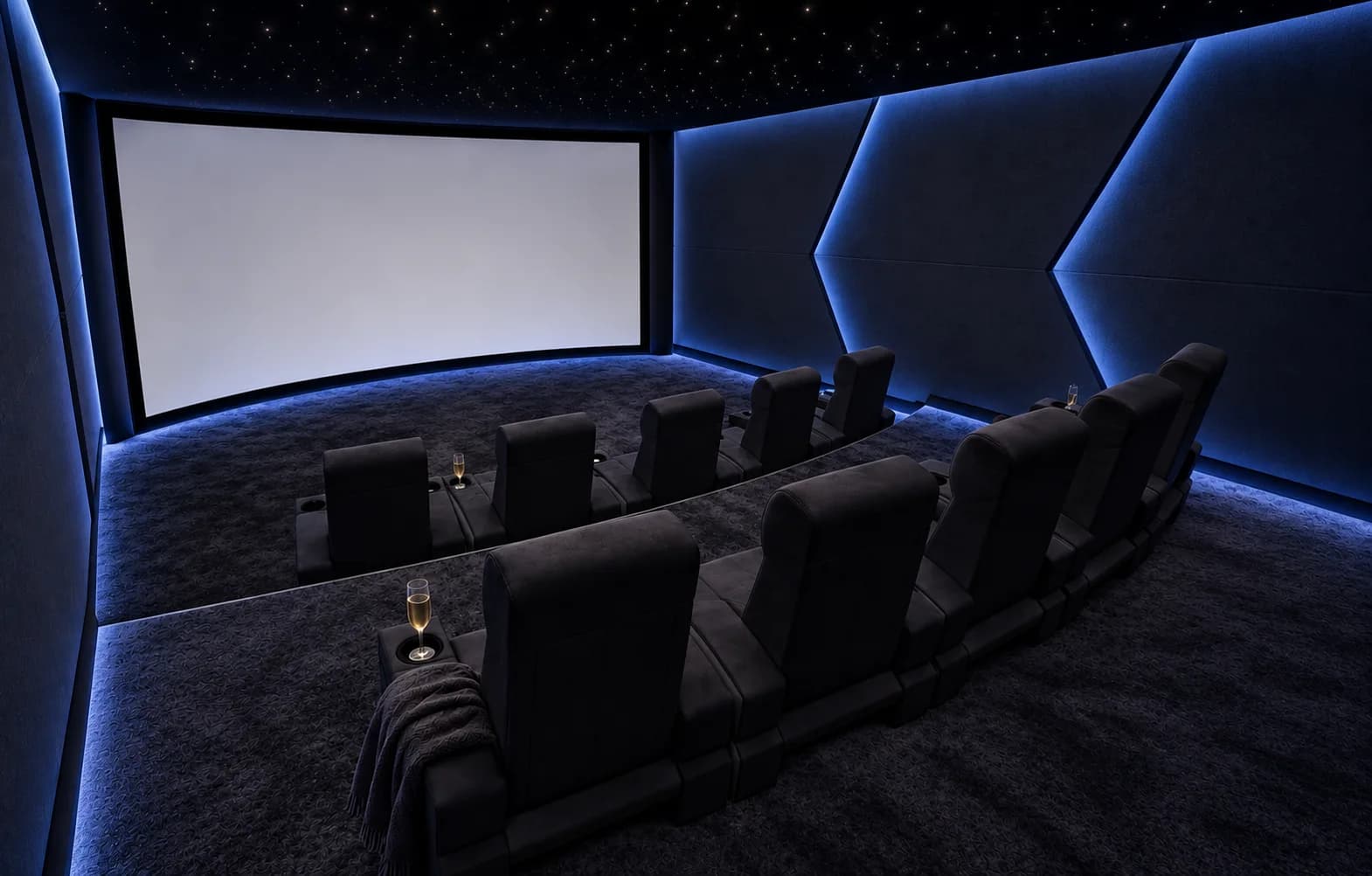
loudspeakers: each channel has its own task
In a modern home cinema, several groups of loudspeakers are used. Each is responsible for a certain part of the sound space.
Front channels reproduce the main sound scene, dialogues and events on the screen. Ambient sound systems form a space on the sides and behind the audience. The upper channels allow you to reproduce sound events above your head.
Subwoofers play a separate role. They reproduce the low frequencies responsible for the physical sense of scale - from the deep hum of the engine to the shock wave of the explosion.
When designing, we calculate the required number of loudspeakers, their location, direction and ability to create the required sound pressure in the spectator area.
The number of loudspeakers alone does not determine the quality of the sound. Much more important is how well they work with the geometry of a particular room and the location of the audience.
Dolby Atmos: sound in three dimensions
In traditional multichannel systems, the audio track is distributed between predefined channels. Dolby Atmos extends this principle: a sound engineer can determine the position and movement of sound objects in three-dimensional space.
For example, the sound of a helicopter flying over viewers can move sequentially between loudspeakers, creating a continuous sound trajectory.
To accurately reproduce such effects, it is necessary to correctly design the geometry of the entire acoustic system.
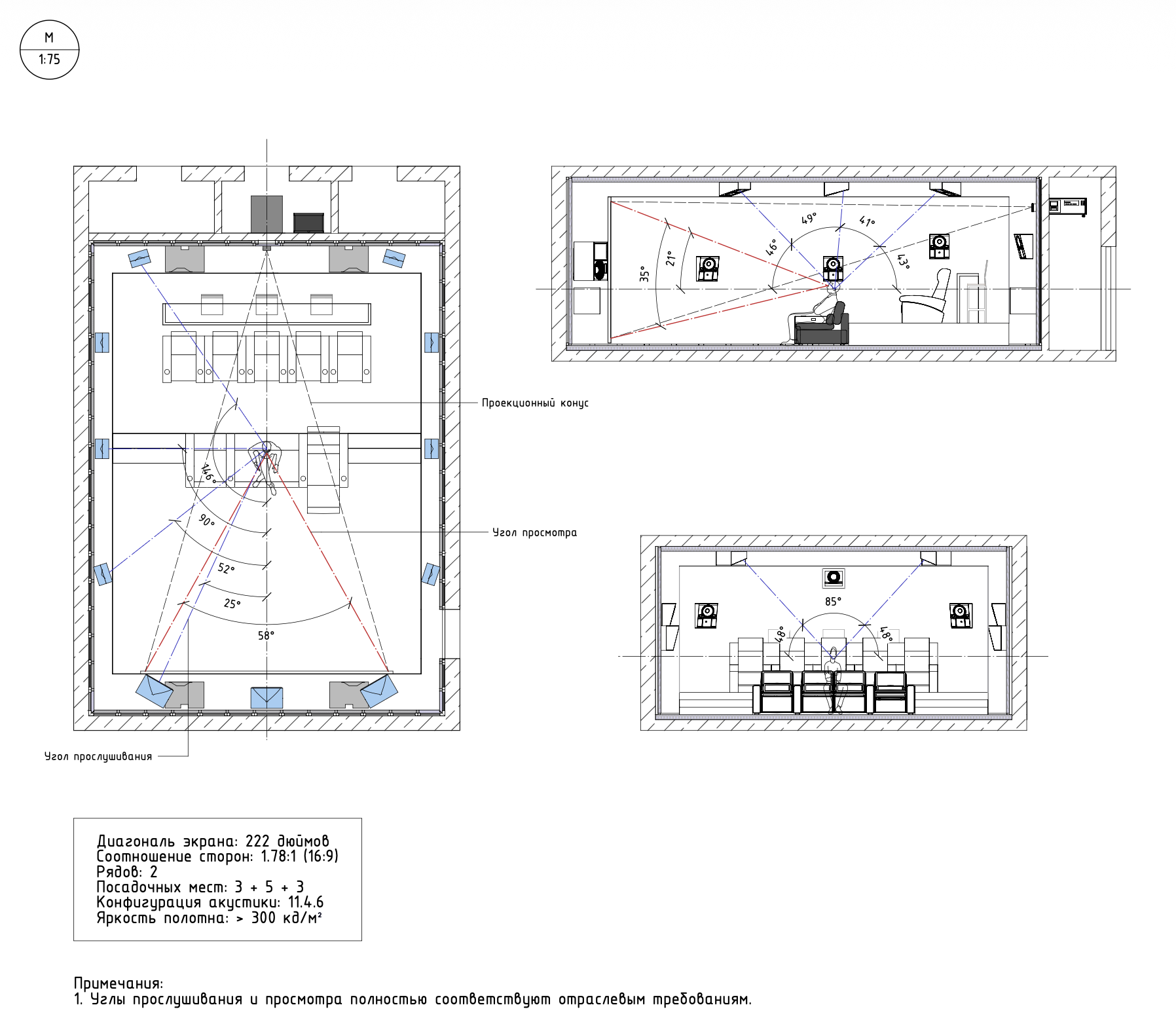
We calculate the angles of placement of loudspeakers relative to spectator seats, take into account the diagrams of direction, distance, room height and possible acoustic obstacles.
Depending on the architecture of the room and the tasks assigned, the configuration may include 7.1.4, 9.1.6 or more complex systems with multiple subwoofers. The specific configuration is determined by the project.
Audio Processor: Control of Sound Space
The audio processor is the central element of the sound system of a modern home cinema.
It takes the soundtrack of the film, decodes it and distributes the signals between the acoustic channels. In Dolby Atmos systems, the processor also performs spatial rendering of sound objects taking into account the configuration of loudspeakers.
The processor allows you to coordinate loudspeakers with each other: configure time delays, channel levels, frequency characteristics, subwoofers and other playback parameters.
After the processor, the signal goes to power amplifiers that ensure the operation of passive loudspeakers. In systems with active loudspeakers, amplification can be built directly into the loudspeakers themselves.
Therefore, we consider the processor, amplification and loudspeakers as interrelated components of a single sound system.
Simplified signal path: content source → audio processor → power amplifiers → passive loudspeakers. Active subwoofers and loudspeakers receive a signal along the corresponding path and use built-in amplification.
Acoustic design: how the room affects the sound
Even properly located loudspeakers do not guarantee a good result, if you do not take into account the properties of the room itself.
Sound waves are reflected from the walls, ceiling and floor, interact with each other and gradually fade away. These processes determine how intelligible the dialogues will be, how accurately the viewer will be able to localize the sound events and how evenly the low frequencies will be reproduced.
To manage the acoustics of the room, we develop an individual acoustic design. It may include sound-absorbing structures, broadband and low-frequency absorbers, acoustic diffusers and hybrid panels.
Each element performs a specific function. Its type, size, design and location are selected based on the results of acoustic modelling. We do not assign panels only by wall area: it is important to understand at what frequencies and in which areas the impact is required.
Acoustic modelling
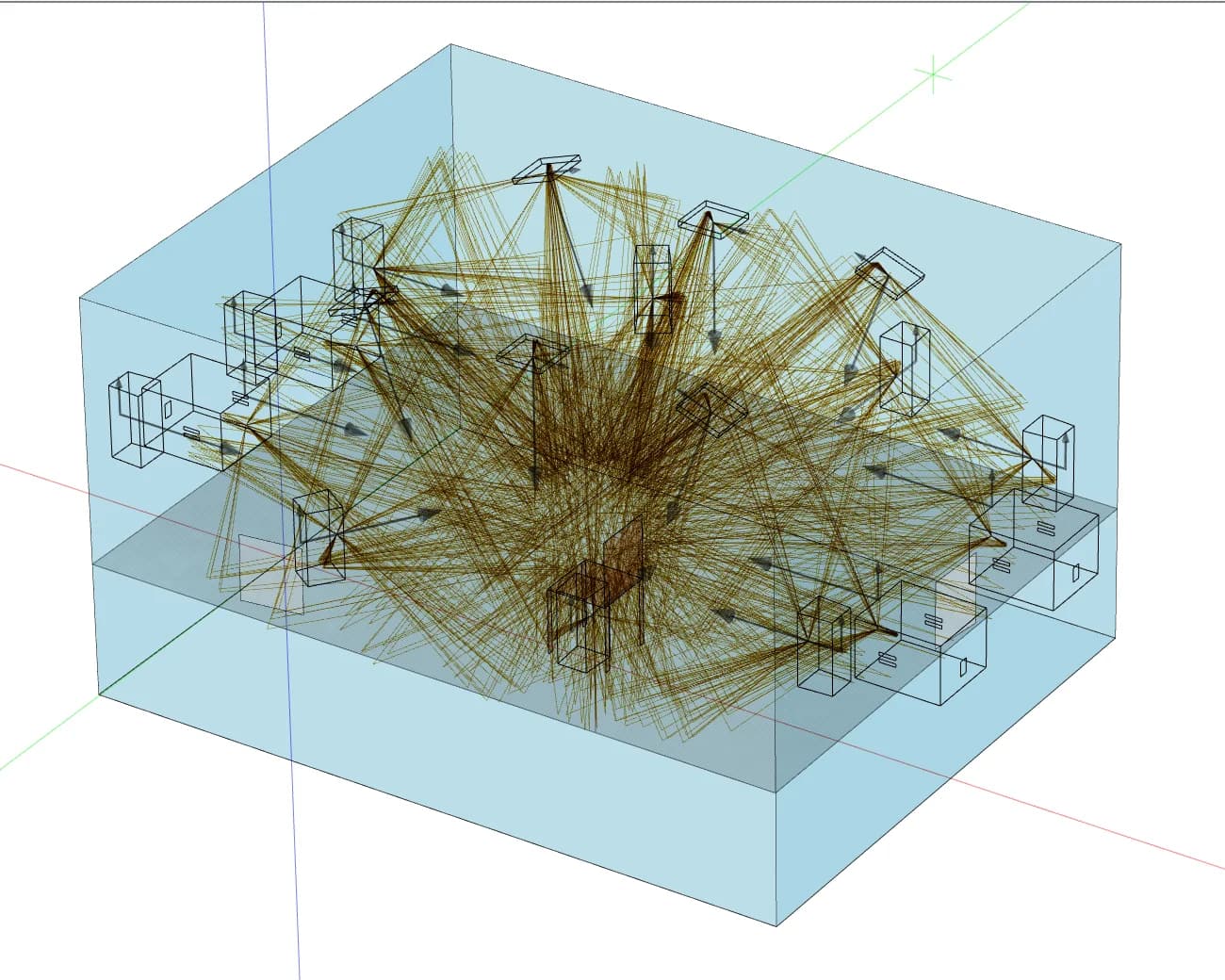
At the design stage, we analyze the geometry of the room, the distribution of the sound field, the nature of reflections and the behavior of low frequencies.
For calculations, we use specialized software, including EASE, as well as other acoustic analysis tools.
We estimate reverberation time, sound pressure uniformity, early reflections and other parameters that affect the quality of playback.
This allows you to determine the necessary acoustic design in advance, coordinate it with the architecture of the room and form technical requirements for finishing structures.
Sound insulation: when the cinema becomes a separate space
Acoustic design and sound insulation solve different engineering problems.
Acoustic design controls the behavior of sound indoors. Sound insulation limits its transmission to adjacent rooms and protects the cinema from external noise.
For a private cinema, this is especially important. The system should retain the ability to play dynamic scenes at high volume levels, while the transmission of sound to other rooms must be considered at the project stage.
We design soundproofing structures of walls, ceilings and floors taking into account existing building bases, adjoinments, utilities and required insulation characteristics.
Particular attention is paid to the low-frequency range, structural transmission of vibrations and tightness of structures.
The project takes into account doors, ventilation ducts, electric grooves and other elements that can reduce the efficiency of sound insulation.
Sound insulation is considered by us as an independent engineering system, coordinated with the acoustics and architecture of the cinema.
From acoustic modelling to Construction Model
The results of the calculations should be clear not only to the acoustic engineer, but also to the architect, builders, installers and specialists in engineering systems.
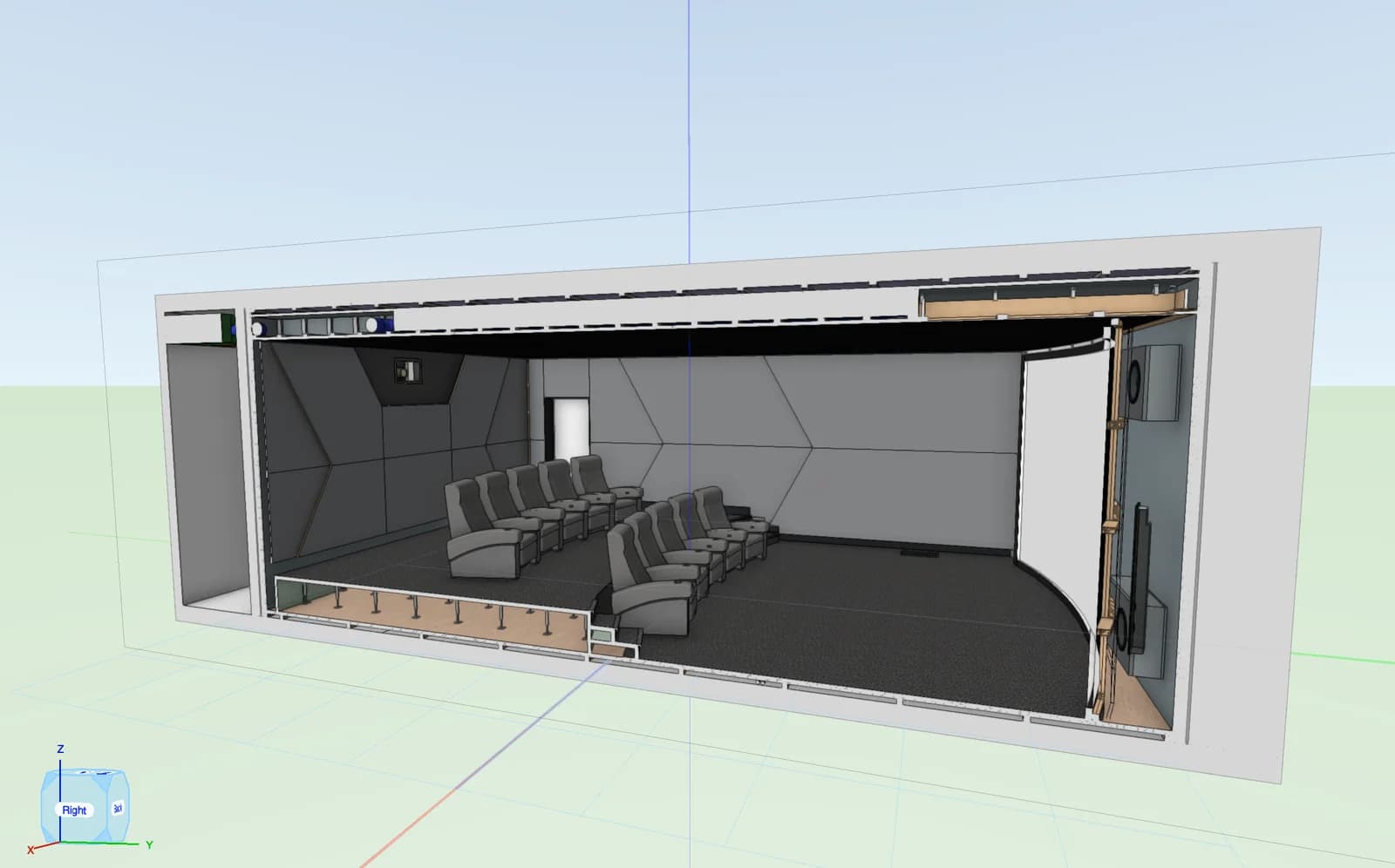
To coordinate design decisions, we use the BIM approach and develop digital models in Vectorworks.
The model fixes the geometry of the room, the location of equipment, acoustic structures, architectural elements and the necessary installation spaces.
This allows you to coordinate design decisions before construction, identify spatial conflicts and prepare working documentation.
As a result, builders receive specific drawings and assemblies, and the installation team receives accurate data for installing and connecting equipment.
Calibration: from design solutions to accurate sound
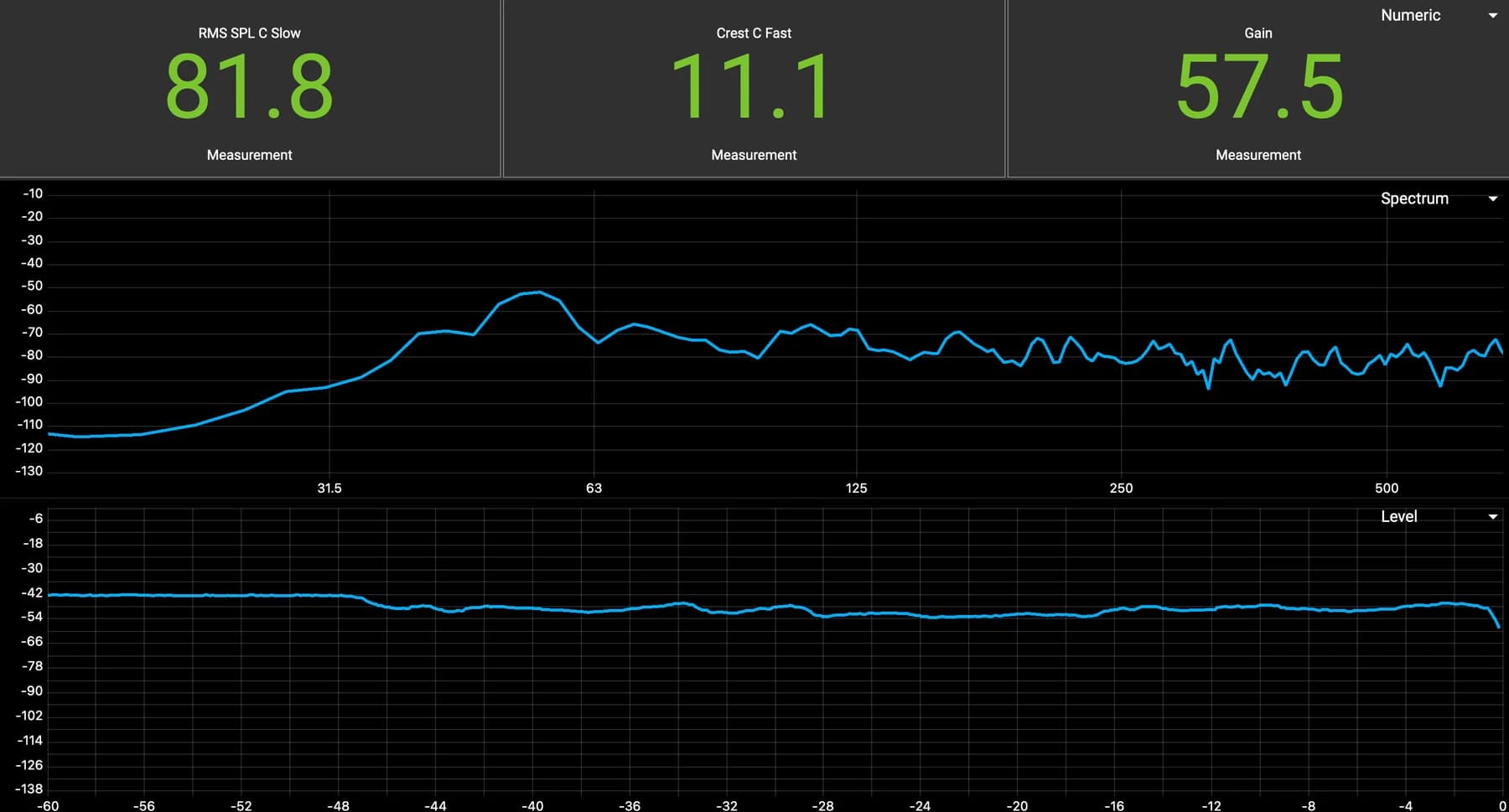
Designing a system, correctly positioning the acoustics and performing installation does not mean completing work on sound. After installing the equipment, we conduct measurements and manual calibration within a few days using a specialized hardware and software complex. We coordinate the levels and time delays of channels, adjust the frequency characteristics and joint work of subwoofers, check the result in the spectator zone. Our task is to bring the actual sound of the system to the reference characteristics laid down in the project and confirm compliance with control measurements.
Cinema Project Engineering Approach
We design acoustics as part of the architecture of the home cinema: from the choice of loudspeaker configuration to the calculation of acoustic design, sound insulation, preparation of working documentation and subsequent system setup.
This approach allows making technical decisions based on measurable characteristics, project requirements and recommendations of international industry standards.
Our goal is to achieve predictable and reproducible results in every viewer’s seat.
Frequently Asked Questions About Home Cinema Acoustics
How Many loudspeakers Dolby Atmos Need?
There is no universal quantity. The configuration depends on the size and geometry of the room, the number of rows, the location of spectators and the requirements for the quality of reproduction. For home cinema can be used systems 5.1.2, 7.1.4, 9.1.6 and more complex configurations. The final decision is made after analyzing the room and designing the sound system.
What is CEDIA/CTA-RP22 and why do you need it?
CEDIA/CTA-RP22 is an industry document with recommendations for the design and evaluation of audio systems for private entertainment spaces. It helps to formulate measurable quality goals, including requirements for sound pressure, frequency performance and other parameters. We use it as one of the technical foundations of design, along with applicable Dolby guidelines and other documents.
How is acoustic design different from sound insulation?
Acoustic design controls the reflections, attenuation and distribution of sound inside the cinema. Sound insulation reduces the transmission of sound between rooms and the penetration of external noise. For a high-quality home cinema, both solutions are often needed, but they are calculated according to different principles.
Why do you need an acoustic modelling when expensive speakers have already been chosen?
The cost of the equipment does not negate the influence of the room. The calculation helps to determine the location of loudspeakers, the necessary power and sound pressure, the nature of reflections and acoustic design parameters. It allows you to detect potential problems before construction, when fixes are usually cheaper.
What does an audio processor do in a home cinema?
The audio processor decodes sound formats, including Dolby Atmos, with appropriate support, distributes signals between channels and allows you to configure levels, delays, frequency correction and subwoofers. It connects the sound source to the playback system and plays an important role in its calibration.
What do you need calibration for?
Calibration is necessary so that the installed system works in concert in a real room and corresponds to the design characteristics. Within a few days, we perform measurements and manual adjustment using a specialized hardware and software complex: coordinate levels, delays, frequency characteristics of channels and the operation of subwoofers. Then, with control measurements, we check the achievement of the reference characteristics specified by the project.
Is it possible to make a good Dolby Atmos without ceiling speakers?
There are solutions with the reflection of sound from the ceiling, but for a dedicated home cinema, we tend to consider direct radiation from properly positioned upper speakers. The choice depends on the architectural limitations and target characteristics of the system.
Do I need to design soundproofing before repairs?
Yes, preferably at an early stage. Effective sound insulation depends on the design of walls, ceiling, floor, doors, ventilation and communication tunnels. After finishing, correcting errors is much more difficult, especially in the low-frequency range.
Why do you need a BIM model of Vectorworks when designing a cinema?
The digital model helps to coordinate the placement of loudspeakers, sound insulation and acoustic designs with architecture and engineering networks. On its basis, working documentation is prepared that is understandable to builders and installers. This reduces the risk of spatial conflicts and implementation errors.